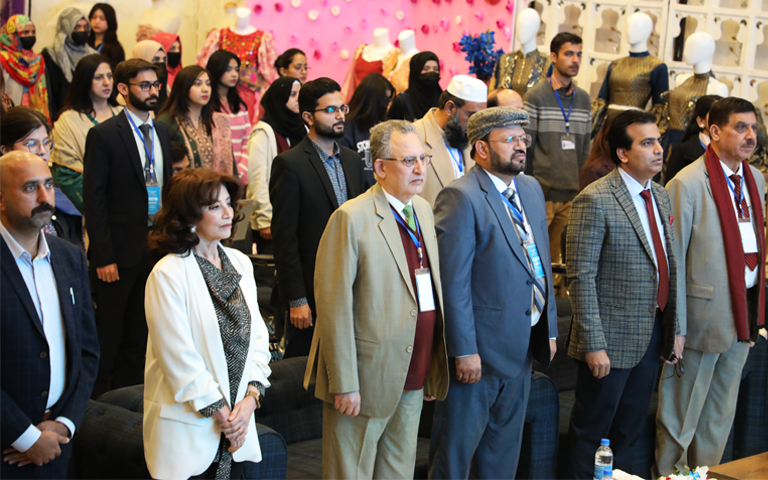
The State, Society, and Culture – Dynamics of Power, Identity, and Change conference brought together academics, policymakers, development practitioners, and civil society representatives to engage in critical discussions on the evolving intersections between governance, social change, and environmental sustainability.
The conference aimed to explore how power dynamics, cultural identities, and socio-political shifts are shaping developmental policies, with a particular focus on climate change, economic development, and sustainability in the context of the Global South.
Among its key themes was the growing urgency of climate change and the need for a just and equitable transition to a green economy. Recognizing the increasing vulnerability of climate-affected nations like Pakistan, the conference provided a platform for experts to share insights, research findings, and practical strategies for climate adaptation, sustainable development, and green financing.
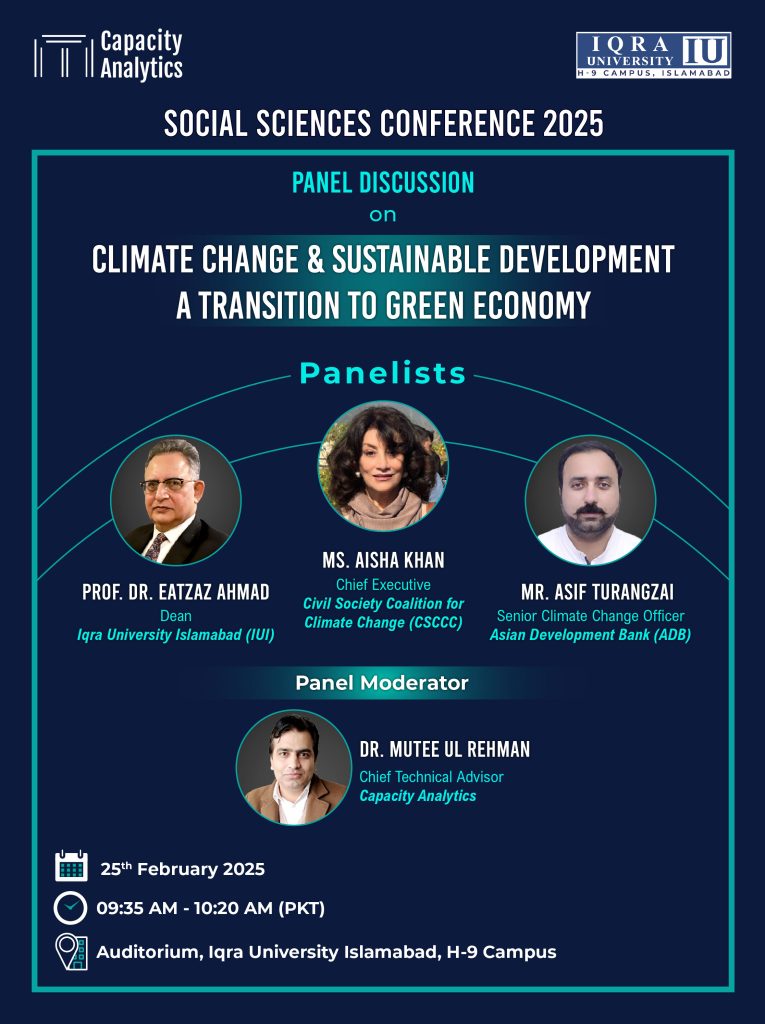
Panel Discussion Overview
Title:Climate Change and Sustainable Development: A Transition to a Green Economy
This high-level panel discussion was a key segment of the conference, focusing on the critical intersection between climate action, sustainable development, and economic growth. It addressed the challenges and opportunities in transitioning to a green economy, particularly for developing nations like Pakistan.
The panel brought together renowned experts from academia, development finance institutions, and civil society to explore practical strategies for promoting climate justice, financing climate-resilient projects, and enhancing collaboration between academia, government, and industry.
Discussions highlighted the importance of localized solutions, equitable access to climate finance, and evidence-based policymaking rooted in rigorous research and data analysis. The panellists also emphasized the need for stronger regional cooperation, robust accountability frameworks to counter greenwashing, and capacity building at the community level to ensure inclusive and sustainable transitions.
Panellists
Ms. Aisha Khan – [Chief Executive, Civil Society Coalition for Climate Change and the Mountain and Glacier Protection Organization]
Mr. Asif Turangzai – [Senior Climate Change Officer, Asian Development Bank (ADB)]
Dr. Eatzaz Ahmad – [Dean, Iqra University Islamabad (IUI)]
Moderator
Dr. Mutee ul Rehman – [Chief Technical Advisor, Capacity Analytics]
Key Discussion Points
Climate justice for vulnerable communities and the role of governments, financial institutions, and civil society in ensuring an equitable green transition.
Asian Development Bank’s climate financing initiatives, Pakistan-specific projects, and ADB’s Strategy 2030.
Development of accurate metrics, methodologies and dynamic models to measure green economic transitions and the role of academia in providing evidence-based research for policymaking.
Countering greenwashing through transparency, accountability, and community-centric project design.
The need for collaborative platforms bridging academia, industry, government, and civil society for effective climate action.
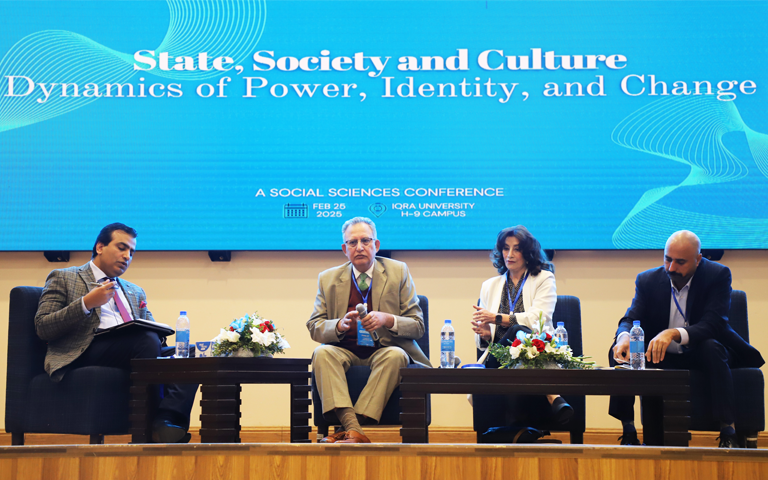
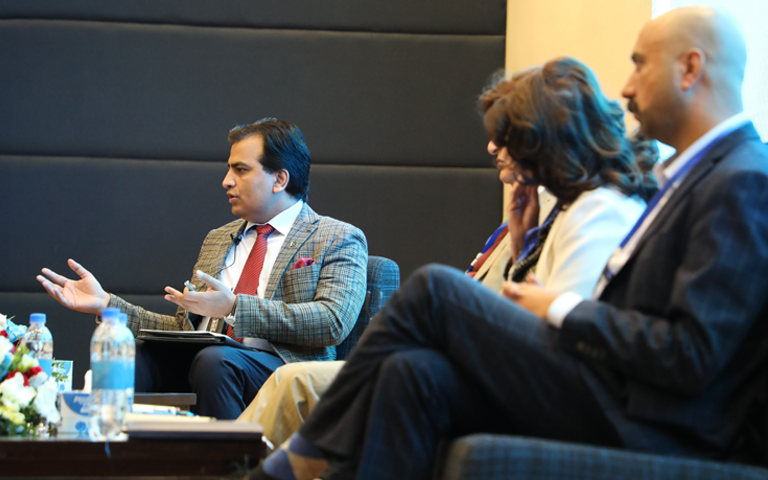
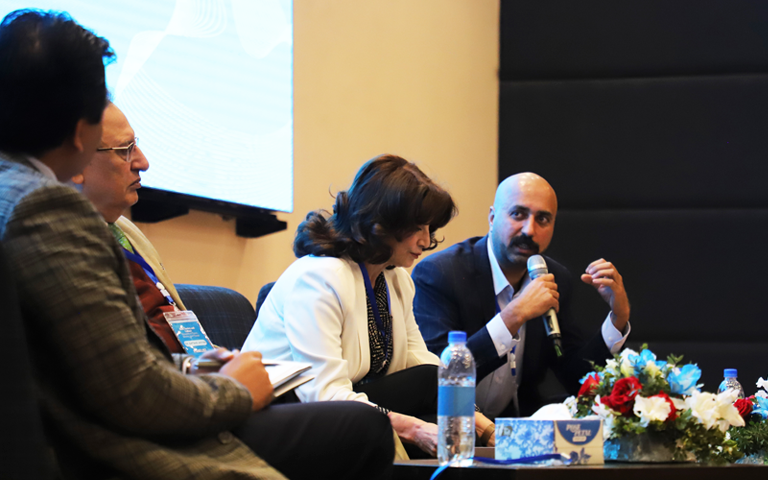
Panellists Ms. Aisha Khan, Mr. Asif Turangzai, and Dr. Eatzaz Ahmad responding to questions posed by Moderator Dr. Mutee ul Rehman during the panel discussion on Climate Change and Sustainable Development: A Transition to a Green Economy.
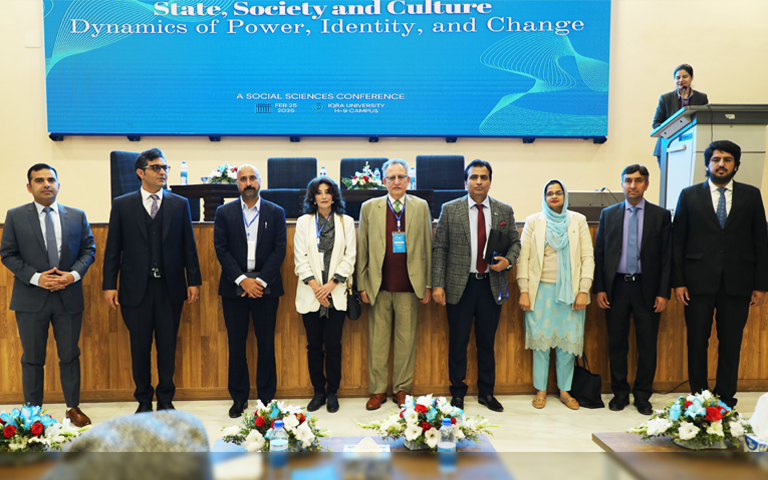
Organizers from Iqra University with panellists Ms. Aisha Khan, Mr. Asif Turangzai, Dr. Eatzaz Ahmad, Moderator Dr. Mutee ul Rehman, and CEO Capacity Analytics, Ms. Tayaba Batool at the Social Sciences Conference 2025.
Panellists and Moderator participating in the panel discussion on Climate Change and Sustainable Development, highlighting collaborative approaches for a green economy.
Dr. Mutee ul Rehman, Moderator, facilitating the panel discussion by engaging panellists with key questions on climate change methodologies, green economy, and sustainable development.
Mr. Asif Turangzai responding to a question, elaborating on ADB’s climate finance initiatives and support for Pakistan’s green transition.